Free Flap Wound Reconstruction
In my NHS practice, I work within a London major trauma centre, treating patients with complex and potentially limb-threatening injuries. I am part of a specialist multidisciplinary orthoplastic team, working closely with orthopaedic and vascular surgeons to coordinate bone fixation, restore blood flow, manage infection and reconstruct damaged soft tissues. This collaborative approach is central to preserving limb function and achieving the best possible recovery.
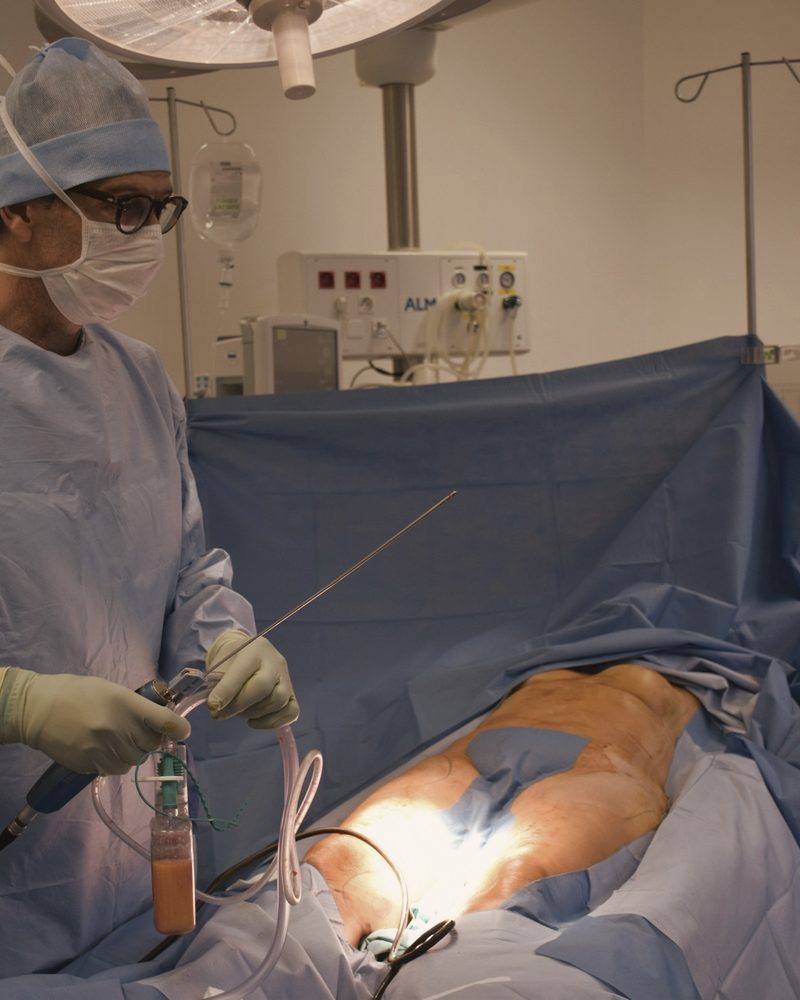
Soft-tissue reconstruction of the leg
Soft-tissue reconstruction may be required when an injury, infection, previous surgery or chronic wound leaves bone, tendon, metalwork or important blood vessels exposed. The aim is to provide healthy, durable tissue coverage, protect the underlying structures and support healing and rehabilitation.
Every defect is different. I carefully assess the location and size of the wound, the condition of the surrounding tissues, blood supply, infection, bone stability and the patient’s overall health before recommending the most appropriate reconstruction.
Local flaps
A local flap uses skin, fat or muscle from close to the wound. The tissue is carefully moved or rotated into the defect while remaining connected to its original blood supply.
Local flaps can provide reliable coverage without surgery elsewhere on the body. They are particularly useful for smaller or moderately sized wounds when healthy surrounding tissue and an appropriate blood supply are available.
Free flaps
Larger or more complex wounds may require a free flap. Skin, fat or muscle is taken from another part of the body and transferred to the leg. Using microsurgery, the flap’s small blood vessels are connected to vessels near the injury to restore its circulation.
Free flaps allow healthy, well-vascularised tissue to be brought into areas where the surrounding tissues are severely damaged or scarred. They can cover exposed bone, joints, tendons or metalwork and may be an important part of limb-salvage surgery.
The choice between a local and free flap is highly individual. My aim is to select the least complex reconstruction that will provide safe, durable coverage, minimise the impact on the donor area and support the patient’s long-term mobility and function.
Free flap reconstruction is major surgery, carried out in close coordination with the wider trauma and orthopaedic team, and I plan and perform the microsurgical stages personally.
Wound preparation
The wound is carefully debrided, removing damaged or non-viable tissue and any contamination, to create the healthiest possible bed for the flap once fractures and bone injuries are stabilised.
Flap selection & harvest
Healthy tissue — commonly skin, fat and sometimes muscle from the thigh, abdomen or back — is raised together with the blood vessel that supplies it, chosen to match the size and depth of your wound.
Microsurgical transfer
The flap is moved to the injury site, and its blood vessels, often under a millimetre wide, are reconnected to vessels near the wound under the operating microscope to restore its blood supply.
Inset & monitoring
The flap is shaped and secured over the defect, and closely monitored in the days afterwards to confirm the blood supply remains healthy while the tissue takes.
Who is it for?
Free flap reconstruction is considered when a wound cannot be closed by simpler means, either at the time of injury or afterwards. It may be appropriate if you have:
An open fracture or major traumatic wound with significant soft-tissue loss
Exposed bone, tendon, nerve or surgical hardware that needs healthy tissue cover
A chronic, non-healing wound following injury or previous surgery
A limb at risk of amputation without adequate soft-tissue reconstruction
Been assessed as fit for a longer microsurgical operation and the recovery it involves
Before & After
Coming soon
Before-and-after photographs are shared only with each patient’s consent. Examples will be added here in due course — in the meantime, Dr Borges is happy to discuss expected results at your consultation.
Reconstruction leaves scars at both the injury site, where the flap is inset, and the donor site the tissue was taken from — commonly the thigh, abdomen or back. Both areas are closed to minimise scarring, but given the nature of the injury and surgery, scars will be visible and can take up to two years to fully soften and fade. Scar massage, once healing allows, can improve both appearance and flexibility.
What to expect
This is major reconstructive surgery, and recovery takes place in close partnership with your wider trauma team, often over many months.
Hospital stay
You will stay in hospital for a minimum of 4–5 nights while the flap is closely monitored to confirm its blood supply is well established.
Weeks 1–4
Focus is on wound healing and protecting the flap, with mobility and weight-bearing guided closely by your orthopaedic and trauma team.
Months 1–3
Swelling settles gradually and rehabilitation continues, often alongside physiotherapy to restore strength and function.
Beyond 3 months
Further procedures, such as flap thinning or scar revision, may be considered once the reconstruction has fully settled, as part of your longer-term recovery.
Why choose this procedure
Advantages of Free Flap Wound Reconstruction
Restores durable soft-tissue cover
Provides healthy, well-vascularised tissue where the body cannot heal a wound on its own.
Protects exposed structures
Covers bone, tendon, nerve or hardware, reducing the risk of infection and further complications.
Improves the chance of limb salvage
Can be the difference between saving and losing a severely injured limb.
Supports functional recovery
By closing the wound securely, reconstruction allows rehabilitation and weight-bearing to progress.
A tissue match for the defect
Flap choice can be tailored to the size, depth and location of your wound.
Multidisciplinary care
Treatment is coordinated with the orthopaedic and trauma team throughout, as part of major trauma centre care.
Risks
As with any major surgery, it's essential we discuss the risks together so you're fully informed. While most flaps succeed, potential risks include:
Flap failure
A serious but uncommon risk, occurring in a small percentage of cases, where the transferred tissue loses its blood supply; close monitoring aims to catch and address this early.
Infection
A significant risk after major trauma, particularly with contaminated wounds, and treated with antibiotics and, where needed, further surgery.
Bleeding or haematoma
May require a return to theatre to address.
Donor site problems
The area the flap is taken from can be slow to heal or leave a noticeable scar or contour change.
Delayed or non-union of the bone
Underlying fractures can take longer to heal, sometimes needing further orthopaedic treatment.
Need for further surgery
Additional procedures are often part of the overall reconstructive plan, from the outset or later on.
Blood clots
Deep vein thrombosis or pulmonary embolism are serious but rare risks of major surgery and prolonged recovery.
When performed as emergency or acute trauma care, free flap wound reconstruction is provided as NHS-funded treatment through King's College Hospital and the South East London & Kent Major Trauma Centre. For elective or secondary reconstruction — for example, revising an earlier reconstruction or addressing a chronic wound outside the acute trauma pathway — private consultation and treatment is available, with an exact quote following assessment.
Book a ConsultationLocations
Consultations and surgery take place at accredited hospitals and clinics across Kent and London, with consultations available in English, Portuguese and Spanish.



Nuffield Health Tunbridge Wells Hospital
Kingswood Road, Tunbridge Wells, Kent, TN2 4UL
Google Map →
Wells Health, Fordcombe Hospital
Fordcombe Road, Fordcombe, Tunbridge Wells, Kent, TN3 0RD
Google Map →Wells Health, Tunbridge Wells Hospital
Tonbridge Road, Pembury, Tunbridge Wells, Kent, TN2 4QJ
Google Map →Get in Touch
To arrange an initial consultation, call [Phone – TBD], email [Email – TBD], or leave your details below.
Your information stays private and is only used to respond to your enquiry. If you’re asking about treatment, we may follow up with a few extra questions to make sure we can help. Full details are in our Privacy Policy.