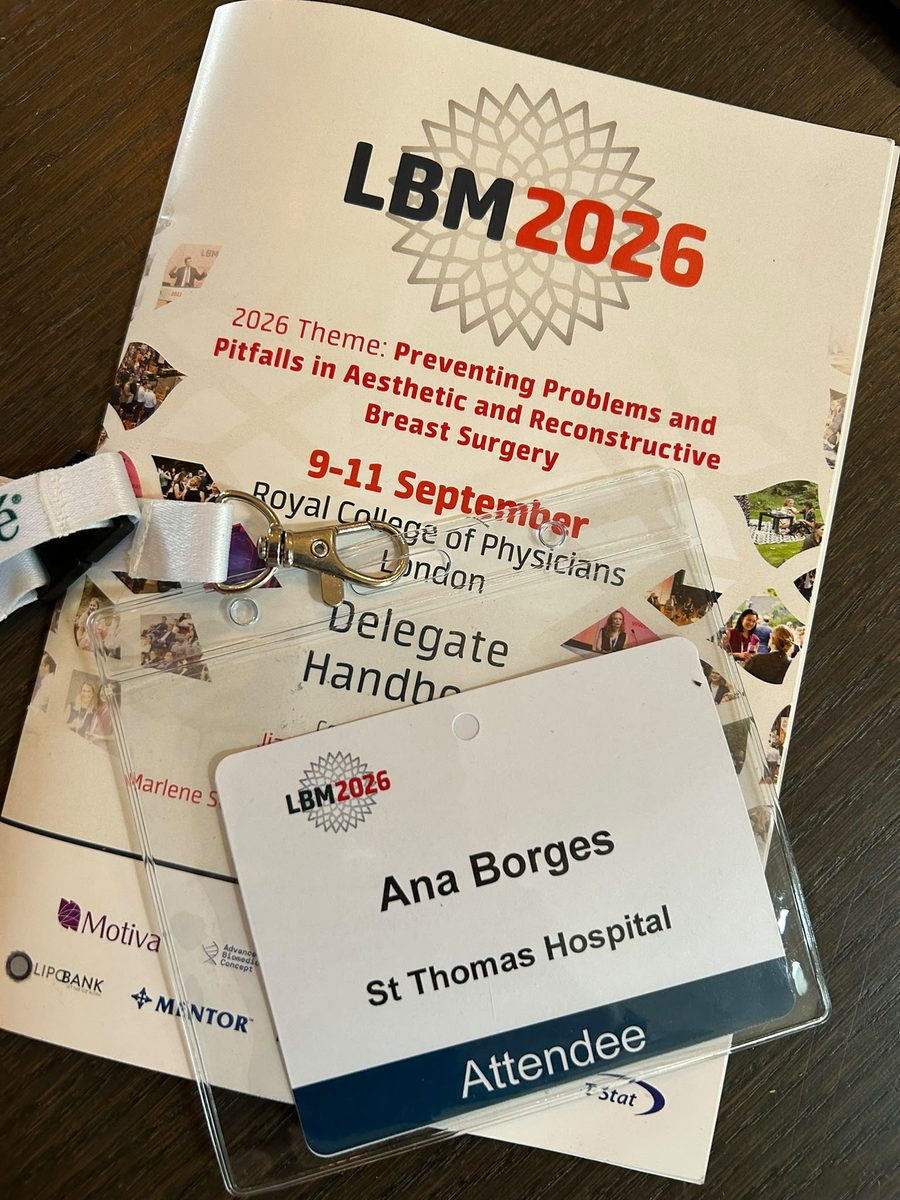
I recently attended the London Breast Meeting, an important annual meeting bringing together leading breast, plastic and reconstructive surgeons from the UK and internationally to discuss developments in breast surgery, reconstruction and aesthetic practice.
For me, attending meetings like this is an important part of being a consultant surgeon. Breast surgery continues to evolve, with ongoing developments in surgical techniques, implant technology, fat grafting, breast reconstruction, complication prevention and strategies to achieve more natural and durable results.
The value of these meetings is not simply learning about something new. They provide an opportunity to critically examine the evidence behind different techniques, discuss difficult cases and complications openly with colleagues, and understand how other specialist centres approach similar surgical problems.
What does this mean for my patients?
Ultimately, continuing professional development should translate into better-informed and safer patient care.
The London Breast Meeting allows me to continually review and refine the way I approach procedures such as breast augmentation, breast reduction, mastopexy (breast uplift), revision breast surgery and breast reconstruction. It also provides an opportunity to consider emerging techniques and technologies carefully before deciding whether they genuinely offer an advantage for patients.
One of the most valuable aspects of specialist meetings is hearing experienced surgeons discuss not only their successful results, but also complications, revisions and techniques that have changed as evidence has developed. Understanding these nuances is particularly important when counselling patients realistically about the benefits, limitations and potential risks of surgery.
Individualised breast surgery
There is rarely a single operation that is right for every patient. Breast shape, skin quality, breast volume, previous surgery, lifestyle and individual priorities all influence surgical planning.
Keeping up to date with developments across both aesthetic and reconstructive breast surgery gives me a broader range of techniques to draw upon when developing an individual treatment plan. My aim is not to follow surgical trends, but to use contemporary evidence and established surgical principles to recommend an approach that is appropriate, proportionate and safe for each patient.
Bringing learning back into clinical practice
Medicine requires lifelong learning. Conferences such as the London Breast Meeting give surgeons the opportunity to step away from day-to-day clinical practice, reflect on their own techniques, challenge established assumptions and exchange experience with colleagues working at the forefront of breast surgery.
For my patients, this means that the advice I give is informed not only by my own training and clinical experience, but also by an ongoing awareness of current evidence, evolving techniques and international best practice.
That commitment to continued learning is an important part of providing thoughtful, evidence-based and individualised breast surgery.